Buy eem18.eu ?
We are moving the project
eem18.eu .
Are you interested in purchasing the domain
eem18.eu ?
domain@kv-gmbh.de · 0541-91531010
Buy eem18.eu ?
How do you calculate probabilities with two probabilities?
To calculate the probability of two independent events occurring, you can use the formula P(A and B) = P(A) * P(B), where P(A) and P(B) are the probabilities of each event occurring. If the events are not independent, you can use the formula P(A and B) = P(A) * P(B|A), where P(B|A) is the probability of event B occurring given that event A has already occurred. If you want to calculate the probability of either event A or event B occurring, you can use the formula P(A or B) = P(A) + P(B) - P(A and B) to account for the overlap between the two events. **
What are probabilities?
Probabilities are numerical measures that quantify the likelihood of a specific event occurring. They range from 0 (indicating impossibility) to 1 (indicating certainty). Probabilities help us make informed decisions by providing a way to assess the likelihood of different outcomes. They are used in various fields such as mathematics, statistics, and science to analyze uncertainty and randomness. **


Similar search terms for Probabilities
Top-Angebote
Products related to Probabilities:
-
iFixit Essential Electronics ToolkitThe iFixit Essential Electronics Toolkit is a compact starter repair kit for phones, tablets, laptops, game consoles and other small electronics. It includes a precision bit driver with 16 precision bits plus the basic opening and prying tools needed for common repairs such as screen and battery replacements.40,99 £*Shipping: 0,00 £Secure redirect to the provider
-
Multisell Products Hub Magnetic Bottle Opener For Household Mineral Water Plastic Beverage Bottles And Cap Opening, Kitchen Accessories Gadgets blueEffortless Cap Opening for Everyday Kitchens Upgrade your routine with this 1 pcs Kitchen Accessories Gadgets Magnetic Bottle Opener for Household Mineral Water Plastic Beverage Bottles and Cap Opening designed for convenience and comfort. It makes...34,97 $*Shipping: 0,00 $Secure redirect to the provider
-
Sesderma Reti Age 5 Liposomal Serum Anti-Aging Innovation 30mLA facial serum for wrinkles and signs of ageing. Reduces wrinkles and fine lines. Hydrates and strengthens barrier. Restores youthful radiance. 5-Retinoid System: smooths wrinkles, accelerates renewal, and boosts collagen. Biomimetic Peptides: fill expression lines by stimulating collagen synthesis.41,69 £*Shipping: 5,34 £Secure redirect to the provider
-
Microsoft Office 5 DevicesMicrosoft Office 5 Devices. Lifetime licence for 5 devices, delivered digitally by email. Includes essential productivity applications for work and home, multilingual support where available, official download access and installation guidance. No physical product or shipping is required.249,95 £*Shipping: 0,00 £Secure redirect to the provider




-
What are birthday probabilities?
Birthday probabilities refer to the likelihood of two or more people sharing the same birthday in a group. This concept is often used in probability and statistics to demonstrate the counterintuitive nature of probability. The birthday paradox, for example, shows that in a group of just 23 people, there is a greater than 50% chance that two people will share the same birthday. This is due to the large number of possible pairings and the relatively small number of days in a year. **
-
What are probabilities in math?
Probabilities in math represent the likelihood of a specific event occurring. They are typically expressed as a number between 0 and 1, where 0 indicates impossibility and 1 indicates certainty. Probabilities can be calculated using various methods, such as counting outcomes, using formulas like the probability mass function or probability density function, or through simulations. Understanding probabilities is essential in various fields, including statistics, finance, and science, as they help in making informed decisions and predictions based on uncertain outcomes. **
-
How do you calculate probabilities?
Probabilities are calculated by dividing the number of favorable outcomes by the total number of possible outcomes. This can be represented as a fraction, decimal, or percentage. In some cases, probabilities can also be calculated using mathematical formulas or statistical methods. It is important to ensure that all possible outcomes are accounted for when calculating probabilities to obtain an accurate result. **
-
How can probabilities be determined?
Probabilities can be determined by analyzing the likelihood of different outcomes occurring based on available information and data. This can involve using mathematical formulas, statistical analysis, and historical data to calculate the probability of a specific event happening. Probabilities can also be determined through experimentation and observation, where repeated trials can help estimate the likelihood of an event occurring. Additionally, probabilities can be influenced by factors such as randomness, uncertainty, and the presence of variables that may affect the outcome. **

What are probabilities in mathematics?
Probabilities in mathematics represent the likelihood of a specific event occurring. They are typically expressed as a number between 0 and 1, where 0 indicates impossibility and 1 indicates certainty. Probabilities can be calculated using various methods such as counting outcomes, using formulas like the probability mass function or probability density function, or through simulations. Understanding probabilities is essential in fields such as statistics, finance, and science to make informed decisions based on the likelihood of different outcomes. **
How are conditional probabilities calculated?
Conditional probabilities are calculated by dividing the probability of the intersection of two events by the probability of the given condition. This can be expressed as P(A|B) = P(A and B) / P(B), where P(A|B) is the conditional probability of event A given event B has occurred, P(A and B) is the probability of both events A and B occurring, and P(B) is the probability of event B occurring. This formula allows us to calculate the likelihood of one event occurring given that another event has already occurred. **
Top-Angebote
Products related to Probabilities:
-
Lush Living Finds Perforated Brick Assembly Toy Accessories With Technology Mechanical Wheels Perforated Brick Assembly Toy Accessories With Technology Mechanical WheelsEnhance Creativity with Technology Mechanical Wheels Unlock the power of innovation with our technology mechanical wheels, designed specifically for perforated brick assembly toy accessories. Whether you are a hobbyist or a seasoned builder, these...43,97 $*Shipping: 0,00 $Secure redirect to the provider
-
Klutz: LEGO GadgetsThis activity kit will have you building 11 machines including a gravity powered car and a wacky boxing robot. The fun doesn't stop once you've completed all of the projects in the book - open-ended prompts will inspire you to continue experimenting...24,99 $*Shipping: 0,00 $Secure redirect to the provider
-
iFixit Essential Electronics ToolkitThe iFixit Essential Electronics Toolkit is a compact starter repair kit for phones, tablets, laptops, game consoles and other small electronics. It includes a precision bit driver with 16 precision bits plus the basic opening and prying tools needed for common repairs such as screen and battery replacements.40,99 £*Shipping: 0,00 £Secure redirect to the provider
-
Multisell Products Hub Magnetic Bottle Opener For Household Mineral Water Plastic Beverage Bottles And Cap Opening, Kitchen Accessories Gadgets blueEffortless Cap Opening for Everyday Kitchens Upgrade your routine with this 1 pcs Kitchen Accessories Gadgets Magnetic Bottle Opener for Household Mineral Water Plastic Beverage Bottles and Cap Opening designed for convenience and comfort. It makes...34,97 $*Shipping: 0,00 $Secure redirect to the provider
-
How do you calculate probabilities with two probabilities?
To calculate the probability of two independent events occurring, you can use the formula P(A and B) = P(A) * P(B), where P(A) and P(B) are the probabilities of each event occurring. If the events are not independent, you can use the formula P(A and B) = P(A) * P(B|A), where P(B|A) is the probability of event B occurring given that event A has already occurred. If you want to calculate the probability of either event A or event B occurring, you can use the formula P(A or B) = P(A) + P(B) - P(A and B) to account for the overlap between the two events. **
-
What are probabilities?
Probabilities are numerical measures that quantify the likelihood of a specific event occurring. They range from 0 (indicating impossibility) to 1 (indicating certainty). Probabilities help us make informed decisions by providing a way to assess the likelihood of different outcomes. They are used in various fields such as mathematics, statistics, and science to analyze uncertainty and randomness. **
-
What are birthday probabilities?
Birthday probabilities refer to the likelihood of two or more people sharing the same birthday in a group. This concept is often used in probability and statistics to demonstrate the counterintuitive nature of probability. The birthday paradox, for example, shows that in a group of just 23 people, there is a greater than 50% chance that two people will share the same birthday. This is due to the large number of possible pairings and the relatively small number of days in a year. **
-
What are probabilities in math?
Probabilities in math represent the likelihood of a specific event occurring. They are typically expressed as a number between 0 and 1, where 0 indicates impossibility and 1 indicates certainty. Probabilities can be calculated using various methods, such as counting outcomes, using formulas like the probability mass function or probability density function, or through simulations. Understanding probabilities is essential in various fields, including statistics, finance, and science, as they help in making informed decisions and predictions based on uncertain outcomes. **
Similar search terms for Probabilities
-
Sesderma Reti Age 5 Liposomal Serum Anti-Aging Innovation 30mLA facial serum for wrinkles and signs of ageing. Reduces wrinkles and fine lines. Hydrates and strengthens barrier. Restores youthful radiance. 5-Retinoid System: smooths wrinkles, accelerates renewal, and boosts collagen. Biomimetic Peptides: fill expression lines by stimulating collagen synthesis.41,69 £*Shipping: 5,34 £Secure redirect to the provider
-
Microsoft Office 5 DevicesMicrosoft Office 5 Devices. Lifetime licence for 5 devices, delivered digitally by email. Includes essential productivity applications for work and home, multilingual support where available, official download access and installation guidance. No physical product or shipping is required.249,95 £*Shipping: 0,00 £Secure redirect to the provider
-
Microsoft Office 3 DevicesMicrosoft Office 3 Devices. Lifetime licence for 3 devices, delivered digitally by email. Includes essential productivity applications for work and home, multilingual support where available, official download access and installation guidance. No physical product or shipping is required.169,90 £*Shipping: 0,00 £Secure redirect to the provider
-
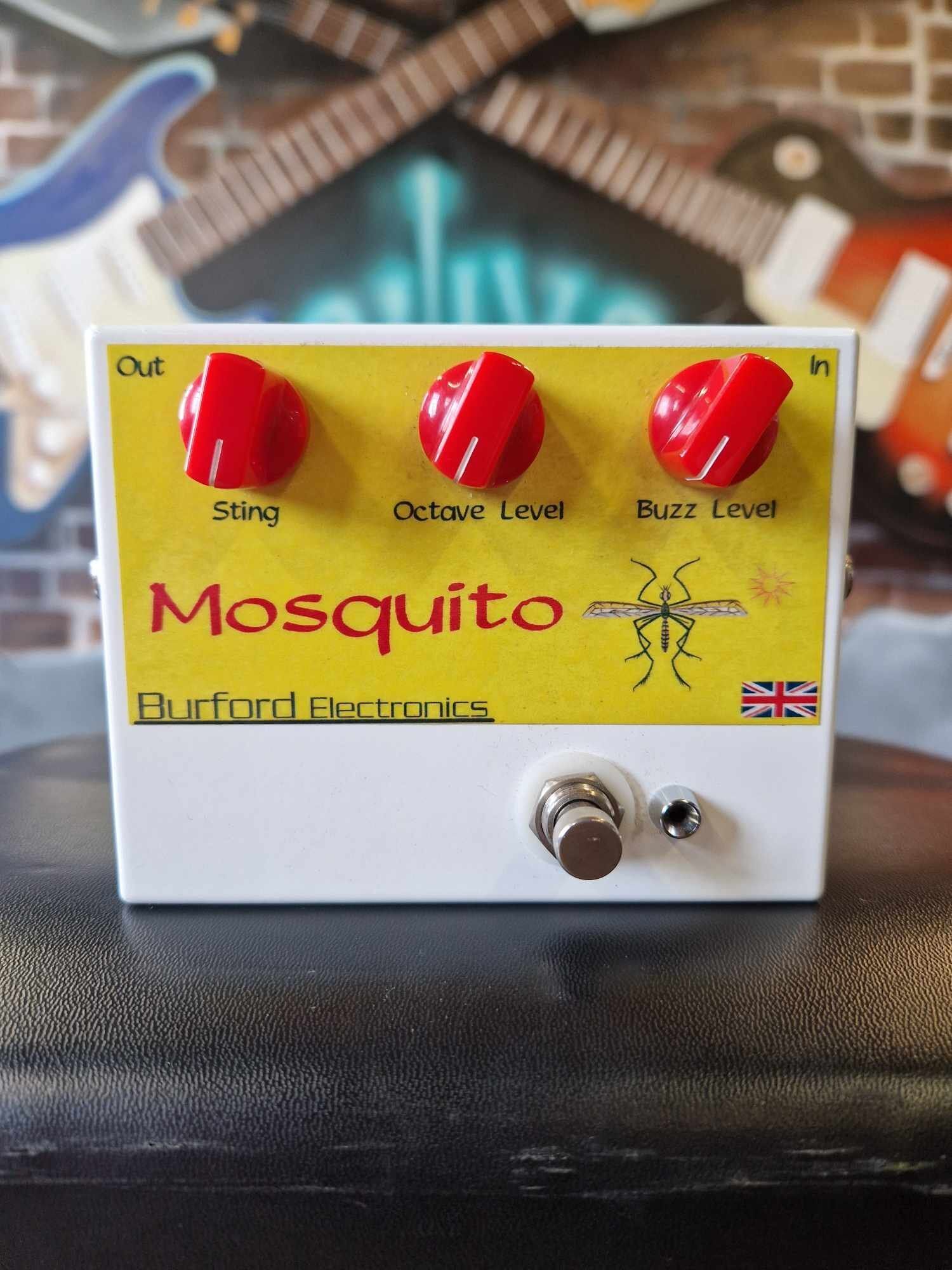
Burford Electronics Mosquito Fuzz Pedal Original - RefurbishedThis is a Burford Electronics Mosquito Fuzz Pedal. The Mosquito is a Fuzz/Octave pedal with a pretty unique sound, being closer to a fuzz more than a distortion this pedal delivers high octane fuzz sounds that will leave a sting. Here's what Burford Electronics say about the Mosquito Pedal: “A unique Octave up fuzz, which will give you pure fuzz on one twist of a knob & octave fuzz on one twist of another knob. So you can have your fuzz setting for a rich body & add octave fuzz to it or turn the fuzz down & just use the octave fuzz control for cutting lead. There is also a control called Sting, this is a tone filter that alters the voice of the octave from sharp to mellow. The octave is not over the top, on the lower register it is quite subtle, you can even play power chords and it holds together extremely well. Without that horrible modulation that is associated with some analogue octave up pedals, even some of the legendary expensive ones. Try soloing somewhere from the 8th fret upwards, it is very responsive and particularly so around 12th/15th fret and even higher. Neck and back pick ups give different sounds. Even playing positions will give different responses.”120,00 £*Shipping: 0,00 £Secure redirect to the provider
-
How do you calculate probabilities?
Probabilities are calculated by dividing the number of favorable outcomes by the total number of possible outcomes. This can be represented as a fraction, decimal, or percentage. In some cases, probabilities can also be calculated using mathematical formulas or statistical methods. It is important to ensure that all possible outcomes are accounted for when calculating probabilities to obtain an accurate result. **
-
How can probabilities be determined?
Probabilities can be determined by analyzing the likelihood of different outcomes occurring based on available information and data. This can involve using mathematical formulas, statistical analysis, and historical data to calculate the probability of a specific event happening. Probabilities can also be determined through experimentation and observation, where repeated trials can help estimate the likelihood of an event occurring. Additionally, probabilities can be influenced by factors such as randomness, uncertainty, and the presence of variables that may affect the outcome. **
-
What are probabilities in mathematics?
Probabilities in mathematics represent the likelihood of a specific event occurring. They are typically expressed as a number between 0 and 1, where 0 indicates impossibility and 1 indicates certainty. Probabilities can be calculated using various methods such as counting outcomes, using formulas like the probability mass function or probability density function, or through simulations. Understanding probabilities is essential in fields such as statistics, finance, and science to make informed decisions based on the likelihood of different outcomes. **
-
How are conditional probabilities calculated?
Conditional probabilities are calculated by dividing the probability of the intersection of two events by the probability of the given condition. This can be expressed as P(A|B) = P(A and B) / P(B), where P(A|B) is the conditional probability of event A given event B has occurred, P(A and B) is the probability of both events A and B occurring, and P(B) is the probability of event B occurring. This formula allows us to calculate the likelihood of one event occurring given that another event has already occurred. **
* All prices are inclusive of VAT and, if applicable, plus shipping costs. The offer information is based on the details provided by the respective shop and is updated through automated processes. Real-time updates do not occur, so deviations can occur in individual cases. ** Note: Parts of this content were created by AI.